For years, SEO has been the foundation for search engine visibility. However, with the rise of AI-driven platforms, the rules are changing. Among the emerging trends is Generative Engine Optimization (GEO).
This article will explain what GEO is, how it works, its differences from SEO, and why it represents the future of search optimization.
What Is GEO?
GEO (Generative Engine Optimization) is the process of optimizing content to improve its visibility on platforms that use artificial intelligence (AI) to generate answers to user queries.
Unlike traditional SEO, which focuses on ranking higher in search engines like Google or Bing, GEO targets how AI systems synthesize and utilize information from various sources to provide direct, concise responses.
The primary goal of GEO is to ensure that content is accurate, clearly structured, and easily integrated into AI-generated answers. This requires creating high-quality, well-organized, and contextually relevant content.
How AI Search Algorithms Work
AI-driven generative models rely on machine learning to create responses by synthesizing large amounts of data from multiple sources. These algorithms process, analyze, and organize data to provide structured, contextually accurate answers.
- Data Collection: AI aggregates information from websites, forums, social media, and other platforms.
- Preprocessing: The data is cleaned and standardized to train the model effectively.
- Training: Models learn to understand context, interpret queries, and identify relationships between concepts.
- Response Generation: AI synthesizes data into concise, structured answers, incorporating content from GEO-optimized sources.
How GEO Works
The GEO process focuses on making content discoverable and usable for AI platforms. It involves several stages designed to prepare content for seamless integration into AI-generated responses.
Steps for GEO Optimization:
1. Analyze Audience Needs and Queries
Identify common queries and themes users search for on AI platforms like ChatGPT or Google’s AI summaries. Determine the preferred content formats—e.g., short answers, lists, detailed articles—and tailor your content accordingly.
2. Create GEO-Friendly Content
Write in a natural, conversational tone to align with how people phrase queries. Use simple, clear language with precise answers to popular questions.
3. Optimize Content Structure and Use Structured Data
Ensure content is well-organized with clear headings, subheadings, and lists. Implement structured data (schema markup) to label content explicitly. Add descriptive alt text for images to help AI platforms use visuals in responses.
4. Ensure Content Reliability and Authority
Cite reliable sources, include statistics, and reference expert opinions to enhance credibility. Regularly update content to keep it relevant and aligned with search trends.
Differences Between SEO and GEO
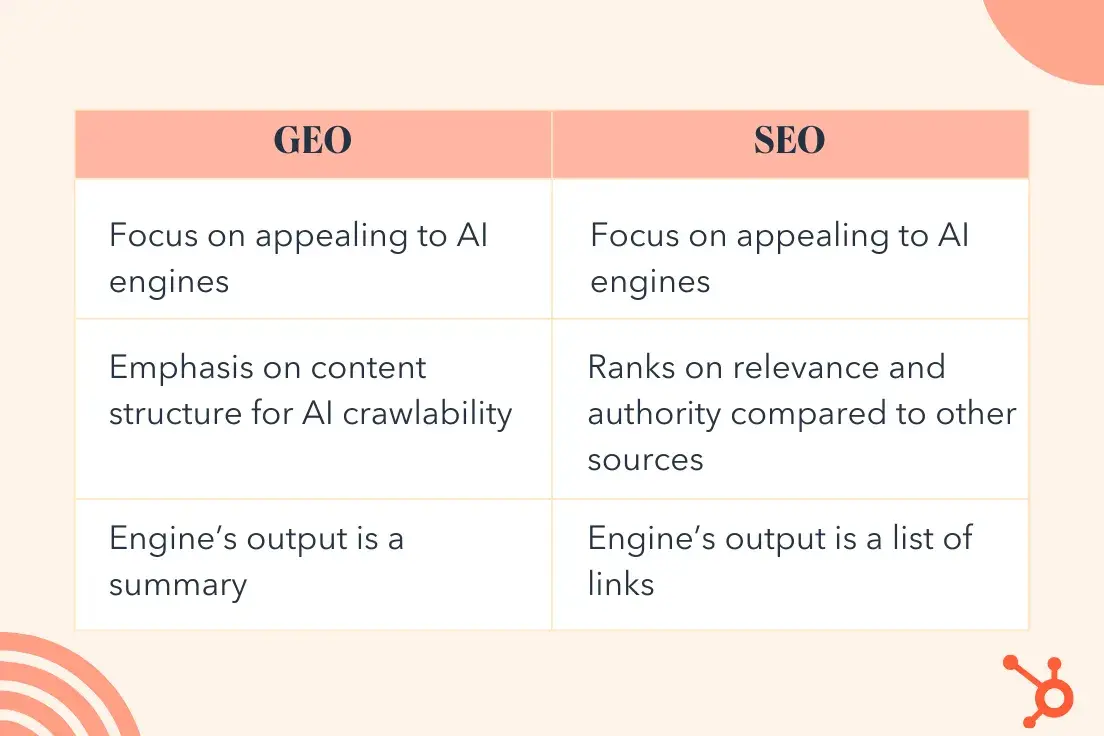
While SEO and GEO share similar objectives—making content visible to users—their approaches differ significantly.
- Focus: SEO targets improving rankings on search engine result pages (SERPs), while GEO ensures AI systems can accurately interpret and use content in responses.
- Execution: SEO relies on keyword optimization and link building, while GEO prioritizes content structure and conversational tone.
- Output: SEO aims to drive traffic, while GEO enhances visibility within AI-generated answers.
The Future Potential of GEO
GEO represents a natural evolution of search engine optimization as AI continues to reshape how users seek information. According to McKinsey, 65% of organizations now use AI regularly, nearly doubling since late 2023.
GEO offers personalized responses, integrates with new technologies, and supports multimodal systems combining text, images, and video. Integrating GEO with traditional SEO creates a balanced strategy that leverages the strengths of both methods.
Conclusion
Generative Engine Optimization (GEO) encourages digital marketers to rethink content creation and optimization strategies. As AI platforms dominate search behavior, GEO offers a pathway to maintain visibility and competitive positioning.