Market Research for Startups and Existing Businesses: Key Steps

Online market research can provide a general overview of an industry, competitors, products, and services, potentially bringing additional profits to your business. Effective analysis reveals customers' desires, fears, and motivations. This data is essential for improving product quality, enhancing customer service, and developing an appealing marketing message. In this article, we'll delve deeper into the topic with examples.
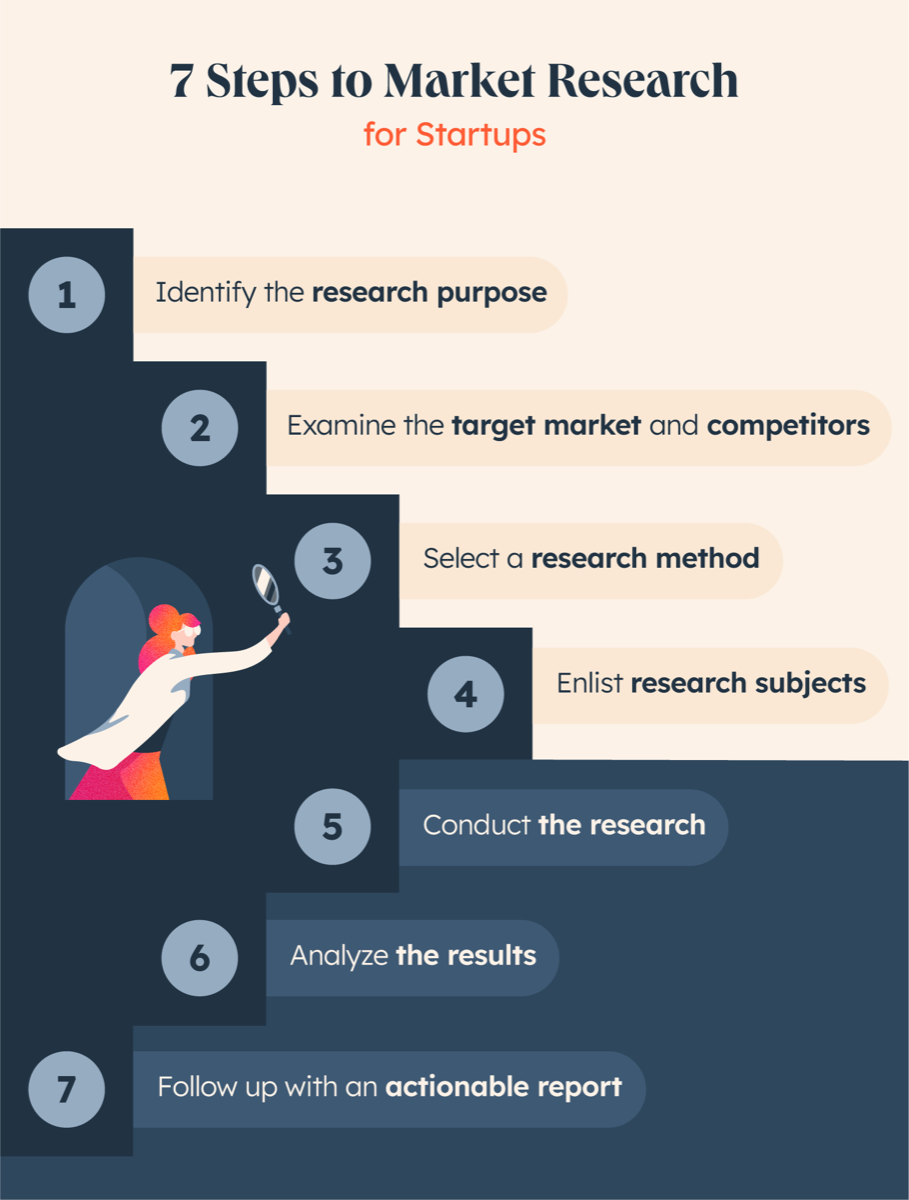
Why Market Research Is Important
Having a general idea of your target audience and their needs isn't enough. To build loyalty, you need a deeper understanding of your customers. This leads to informed decisions, the development of relevant innovations and features, and efficient resource utilization. Market research can help businesses to:
- Validate the viability of a startup and identify potential markets for expansion
- Track marketing trends
- Assess demand for new products or services
- Determine the best product placement strategy
For example, a client wanted to enter the European market with a new mobile application. We conducted research and found that while there was demand for the app, the client should focus on the iOS version, as their target audience primarily uses iOS devices. The result was a confirmed viability of the idea, an understanding of the app's demand, and a more precise definition of the target audience.
Benefits of Market Research
The process can reveal additional insights and provide a better understanding of your own business:
- Data and facts previously considered insignificant
- Risks that were underestimated
- Marketing and other strategies for better market positioning
- Opportunities to adapt business ideas to target market conditions and form a more profitable and efficient business model
For instance, an EdTech company wanted to expand into the markets of the USA, Canada, and the UK. During our research, we discovered that Canada was not a promising market for the client despite its advanced education system. This insight prevented potential losses that could have arisen from an overestimation of demand in Canada, which initially seemed attractive based on marketing hypotheses.
Stages of Market Research
Professional market research includes three main stages. At each stage, it's essential to answer several key questions.
1. Market Analysis
Market Size: Determine how many people have an unmet need for your product or service. Identify different market segments considering their functions and features. Use online tools to obtain up-to-date market data. For example:
- Market Finder: Helps identify target markets and gather information about the target audience according to your business goals.
- SimilarWeb: Provides web traffic statistics for your site and competitors, allowing you to collect information about your target audience's online activity.
Key Industry Players: The analysis should include all potential competitors. We typically research 8–10 key competitors, categorizing them as direct or indirect.
- Direct Competitors: Offer the same services or products as you do. For example, Burger King is a direct competitor to McDonald's because they both offer similar fast food.
- Indirect Competitors: Offer substitute services or products. For example, indirect competitors to Coca-Cola include water and juice from any manufacturer.
Your Market Share: You can determine your potential market share only after understanding how much your target audience spends on certain products or services. Continuing with the EdTech startup example, we found out how many people purchase EdTech services and how much they're willing to pay. This information is crucial for setting an attractive and relevant price without undervaluing your product to stand out among competitors.
Business Barriers: It's important to consider various entry barriers to a new market that may arise during the launch.
- Customer Loyalty: Some startups require significant time and effort to convince potential customers to switch from their current brand to a new, similar product or service. This process demands aggressive advertising campaigns and swift actions.
For example, Airbnb customizes its site for target audiences from different countries and launches targeted advertising. As a result, most tourists use Airbnb instead of Booking.com, which does not segment its target audience.
- Lack of Experience in Effective Communication: Startups offering alternatives to existing products need to spend considerable time and resources demonstrating their product or service to consumers.
- Unsuccessful Market Selection: Choosing the wrong countries for market entry can be detrimental.
For instance, the well-known American online retailer eBay attempted to enter the Chinese market but failed to consider the popularity of the local online store Taobao. eBay lost the competition and abandoned its strategy to enter the Chinese market.
2. Competitor Analysis
This analysis identifies the strengths and weaknesses of not only competitors but also your own business. It clarifies each market player's advantages and business processes. Learning from competitors' positive experiences can provide valuable lessons for your business.
Competitor analysis allows you to identify opponents' weak points to leverage your strengths, adjust your strategic market behavior, and forecast future developments.
Key questions to address:
- What Products and Services Do Your Competitors Offer? We study up to ten key competitors and analyze the distinctive features of their products.
- What Are Your Competitors' Strengths and Weaknesses?
Strengths: Advantages (e.g., competitors have a physical office in the desired country) and features (e.g., they have a regional manager native to the area). Company strengths can include skills and experience, qualified employees, resources, and assets (like corporate software). A company's success can also be determined by the quantity of these resources and the management's ability to mobilize them when needed.
Weaknesses: Refers to the absence or insufficiency of resources necessary for competitive struggle. This could also involve activities where the company lags behind competitors.
Weaknesses may be linked to a lack of skills, experience, or professionalism relevant to competition. For example, your competitors might have an excellent community manager who builds a strong brand community on social media—a must-have in your niche. Weaknesses don't necessarily make a company vulnerable; much depends on its ability to compensate for them. For instance, you might create a fantastic blog with useful and applicable content around which a community forms.
3. Defining the Target Audience
Identifying the target audience for a product or service allows you to focus on a specific group of customers, develop a product for them, and offer it in the right place with the appropriate message. Essentially, the target audience comprises interested buyers who need your product. To find them, answer the following questions:
Who Is Your Ideal Customer? Every target audience is characterized by traits common to each member. You determine the criteria for grouping buyers into a target audience:
- Geographic: For example, a target audience from the UK.
- Socio-Demographic: For instance, men aged 30–40 with average income as potential clients for a price comparison app for fishing gear.
- Psychographic: People seeking another way to express themselves or relieve stress—an excellent target audience for wooden puzzles or paint-by-number kits.
- Behavioral: Individuals who make purchases twice a month.
What Influences Their Purchasing Decision? Understanding motivation requires creating a Buyer Persona—a detailed description of a vivid representative of a specific target audience. The ideal customer is a fictional person to whom marketers assign a name, age, profession, etc. All parameters are derived from the characteristics of the audience they belong to. To create a Buyer Persona, use the following framework:
- Social Characteristics: Gender, age, marital status, income, profession.
- Social Activity dаta: Forums, thematic websites, online stores, social networks.
- Problems Your Product Helps Solve: Identify the issues your potential customer faces that your product can address.
- Emotions Toward Your Product: Does it provide beauty, a fit body, relaxation, or something else?
Creating a Buyer Persona helps you find common ground with your target audience. The goal is to give data a face and character, as working with anonymous statistics is less effective.
Skipping this stage may result in ineffective and incompetent marketing. For example, your website and emails might be created without a specific goal or message, wasting money. The more you know about your ideal customer, the better you'll understand the person you're trying to sell your product or service to. Keep in mind that creating a Buyer Persona can take up to two months, especially if several specialists with over five years of experience are involved.
How Can Customers Learn About Your Product or Service? Numerous media channels can deliver your message to the target audience—search engines, online advertising, print media, outdoor advertising. You need to choose the most effective promotion channels considering your goals, resources, and target audience. Evaluate channels based on:
- Reach: The number of people the media can cover.
- Cost: The price of one contact with the target audience.
- Targeting: The ability to target people based on important characteristics.
- Trust Level: People trust some sources more than others.
Also, consider your brand message, declared values, communication style with customers, and visual style. You can handle this yourself or find a contractor and focus on product development.
Which Target Segment Are Your Customers In?
Segmentation is a system of characteristics that groups buyers together. They can be selected based on income and social activity, demographic and geographic features, nationality, etc.
The essence and goal of market segmentation are to find consumer groups (target segments) most likely to purchase specific products. Market segmentation allows you to:
- Identify Buyer Characteristics: Gender, age, hobbies, profession, average income to craft the right message for the target audience.
- Analyze Market Size: Simplify sales forecasting by understanding how many products or services your target audience can buy in a specific market.
- Adjust Advertising and Marketing Tactics: Determine how to tailor advertising and modify the company's marketing tactics when interacting with different target audience groups.
- Modify Product Features: Understand how to change product properties (price, delivery, appearance, packaging, etc.) when selling to different market segments.
Based on this information, identify the most significant or promising target market segment for your company.
What Products and Services Are They Currently Buying? Analyze the purchasing behavior of your target audience: purchase frequency, favorite suppliers, most popular product features, and average affordable price.
Best Ways to Meet the Target Audience's Needs? Your product should have features that satisfy all the potential clients' current needs and future requests. How to anticipate future requests? Marketers research what the market wants. They conduct customer journey analytics to study interactions between the buyer and business, analyze behavior and motivations. Based on this data, marketers predict your target audience's behavior.
Conclusion
Market research is the systematization of specific data and knowledge that allows you to reassess the company's potential and determine a strategy for future development.
The steps outlined include the main elements of successful market research, enabling you to launch a startup and grow an existing business with less time and resource loss. If you have any questions, feel free to contact us.
If you want to stay updated with the latest online marketing news, follow my Instagram account. I share updates, trends, and insights from the marketing world there.